The furniture you choose for your office does more than fill a room. It shapes how your team works, how clients perceive your brand, and how effectively your space supports daily operations. Still, a lot of companies choose office furniture based on price or style alone, without thinking about how it will affect their culture, health, and productivity in the long run.
Choosing the right Office Furniture for Business is a strategic decision. Done well, it creates an environment where people want to work, where focus comes naturally, and where the physical space actively supports your goals.
This guide walks you through everything you need to consider before making that investment.
Key Takeaways
- Set up your furniture based on how your team actually works. If they need to work together, alone, or with clients, they will need different arrangements.
- Ergonomics is a must; adjustable desks, lumbar-supporting chairs, and placing your monitor correctly are all ways to stay healthy and productive.
- Your brand’s look should be intentional and in line with the image your business wants to project through its furniture.
- If you don’t plan your space well, you’ll end up with too much stuff, bad circulation, and wasted money.
- People always forget how important storage is. Having enough, well-organized storage keeps the workspace clean and professional.
- Being flexible protects your investment; modular furniture that grows with your team saves you the cost of replacing it over and over again.
- Cheap furniture rarely saves you money because it wears out faster and costs more in health problems and replacement over time.
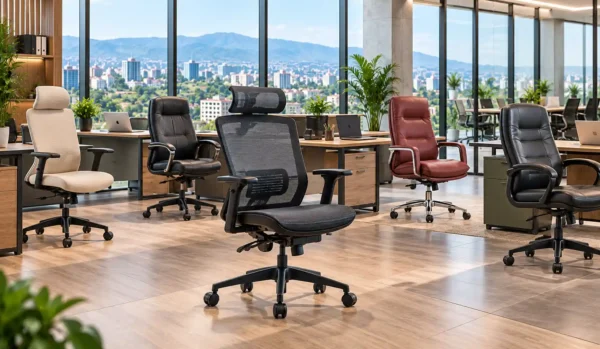
- Spending money on chairs should come first because they affect every employee the most every day and should be given the most thought.
Start With Your Business Needs and Work Style
Every business is different, and your team’s actual way of working should be reflected in their office furniture, not how a showroom thinks they do it. Before browsing options, ask the practical questions first.
How many people need to be accommodated, and how is that number likely to change over the next two to three years? Do employees work independently at fixed stations, or do they collaborate frequently and need flexible, shared spaces? Is client-facing presentation a priority, or is the workspace purely internal? Are there certain departments that need standing desks for active roles, private rooms for private calls, or big surfaces for creative and design work?
The answers to these questions shape every purchasing decision that follows. A law firm has fundamentally different furniture needs from a tech startup. A single-floor boutique office requires a different approach than a multi-department headquarters. Mapping your actual work patterns to your furniture plan is the foundation of getting this right.
Prioritise Ergonomics Without Compromise
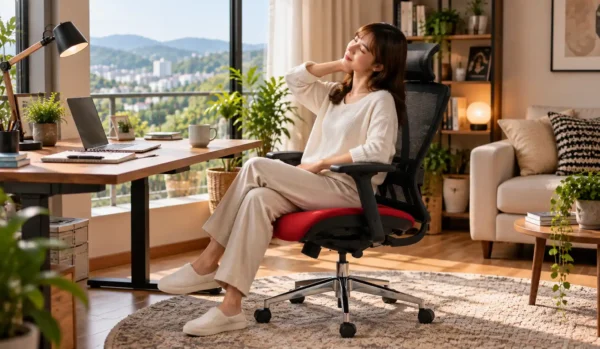
Ergonomic office furniture is not a premium add-on. It is the baseline standard for any business that takes employee health and performance seriously. Bad furniture choices directly cause back pain, injuries from repetitive strain, and tiredness that makes it hard to concentrate. All of these things lead to missed work, lower productivity, and more staff turnover.
The core ergonomic requirements for any office include adjustable-height desks that accommodate different users, ergonomic office chairs with lumbar support and multi-point adjustability, monitor positioning that keeps screens at eye level, and keyboard placement that keeps wrists neutral. When these elements are correctly configured, the physical environment stops being an obstacle and starts supporting the work.
Height-adjustable workstations deserve particular attention. The ability to alternate between sitting and standing throughout the day is one of the most impactful changes a business can make for employee wellbeing. The upfront investment is returned many times over in reduced sick leave and sustained daily productivity.
For businesses evaluating the full range of options, exploring the Different Types of Office Furniture available at Shoppers Stop offers a comprehensive starting point for understanding what is available across categories.
Define Your Aesthetic and Brand Identity
Office furniture design is a direct expression of company culture and brand. The way your workspace looks communicates something to every employee who works in it and every client or partner who visits. That communication should be intentional.
Businesses that want to show they are innovative, flexible, and up-to-date should use modern office furniture with clean lines, neutral colors, and open, airy layouts. Executive office furniture with rich materials, refined finishes, and substantial proportions signals authority, stability, and professionalism. Creative industries often benefit from bold, unconventional pieces that reflect the energy of the work produced within the space.
The goal is coherence. Furniture that clashes with the brand identity or feels mismatched within the space creates a subtle but persistent sense of disorder. When the style is consistent and thought out, the workspace feels like it was designed with purpose, which has a real impact on how people act in it.
For businesses seeking elevated aesthetics without compromising on function, Luxury Office Furniture Designs from Shoppers Stop offer a range of executive and premium commercial pieces worth exploring.
Plan for Space Efficiency and Flexibility
When choosing office furniture, one of the most common and expensive mistakes is buying pieces that don’t fit the space, either in terms of how they look or how they work. Before committing to any purchase, measure the floor plan accurately and map out furniture placement, including clearances for circulation, door swings, and emergency exits.
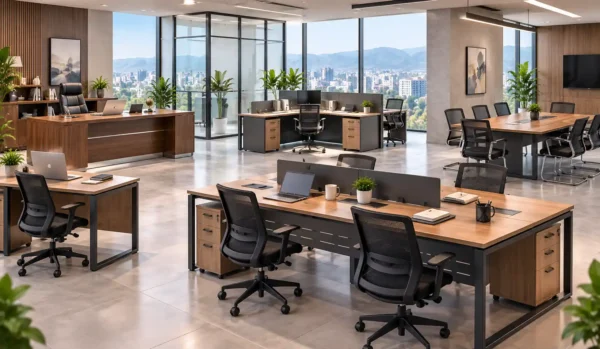
Space efficiency is particularly critical for smaller offices. Small, multipurpose furniture like desks with built-in storage, modular seating that can be rearranged for different uses, and wall-mounted shelving that frees up floor space make it possible to set up a fully functional workspace that isn’t too crowded. Office storage furniture is frequently underestimated in planning; adequate, well-organized storage reduces clutter that disrupts focus and undermines the professionalism of a space.
Flexibility is equally important. Businesses change over time. Structures shift, teams grow, and new ways of working appear. Modular workspace furniture solutions that can be reconfigured or added to over time protect the initial investment and avoid the expense of wholesale replacement as the organization develops. Prioritizing adaptability in furniture selection is one of the most financially sound decisions a growing business can make.
Balance Budget With Long-Term Value
Budget is inevitably a factor in every furniture decision, but framing it correctly matters. It’s not enough to ask what the cheapest option is; the real question is what gives the most value over the life of the furniture.
Low-cost office furniture that wears quickly, loses adjustability, or fails structurally within a few years is not a saving. It is a deferred expense compounded by the disruption of replacement and the health costs of inadequate support in the interim. Quality commercial office furniture, bought once and maintained well, consistently outperforms the economics of repeated budget purchases.
That said, quality does not always mean maximum spend. At Shoppers Stop, you can find great Affordable Office Furniture options that offer real ergonomic performance and durable construction at reasonable prices. This means that you can furnish a professional workspace without going over budget.
When allocating spend across furniture categories, prioritize the pieces that have the greatest daily impact on people: chairs first, desks second, then storage and ancillary pieces. The chair is the single item that affects every employee most directly for the longest period each day. It should receive the most considered investment.
Keep an Eye on Emerging Office Furniture Trends
Staying informed about office furniture trends helps businesses make decisions that remain relevant and functional as the workplace continues to evolve. Several directions are currently shaping how forward-thinking companies approach their spaces.
Biophilic design, which uses natural materials, organic shapes, and plants in furniture for the workplace, is becoming more and more known as a way to improve employee health and creativity. Activity-based working, where the office provides various furniture configurations suited to different tasks rather than one fixed workstation per person, is reshaping how floor plans are organized. Gen Z Office Furniture Trends lean toward collaborative, flexible, and visually unique spaces that feel dynamic rather than institutional. The tastes of younger workers are also becoming a bigger factor.
Sustainability is also a significant and growing consideration. Businesses are buying more professional office furniture from companies that use materials that come from responsible sources, make products that last, and keep their supply chains honest. This is because buying decisions are more in line with the values of the company as a whole.
Conclusion
Choosing the right office furniture for your business is about far more than aesthetics or budget. People can do their best work in a space that is physically supportive, visually coherent, and functionally organized for the day’s tasks.
The businesses that get this right do not just have nicer offices. They have healthier teams, stronger cultures, and spaces that actively contribute to performance and growth.
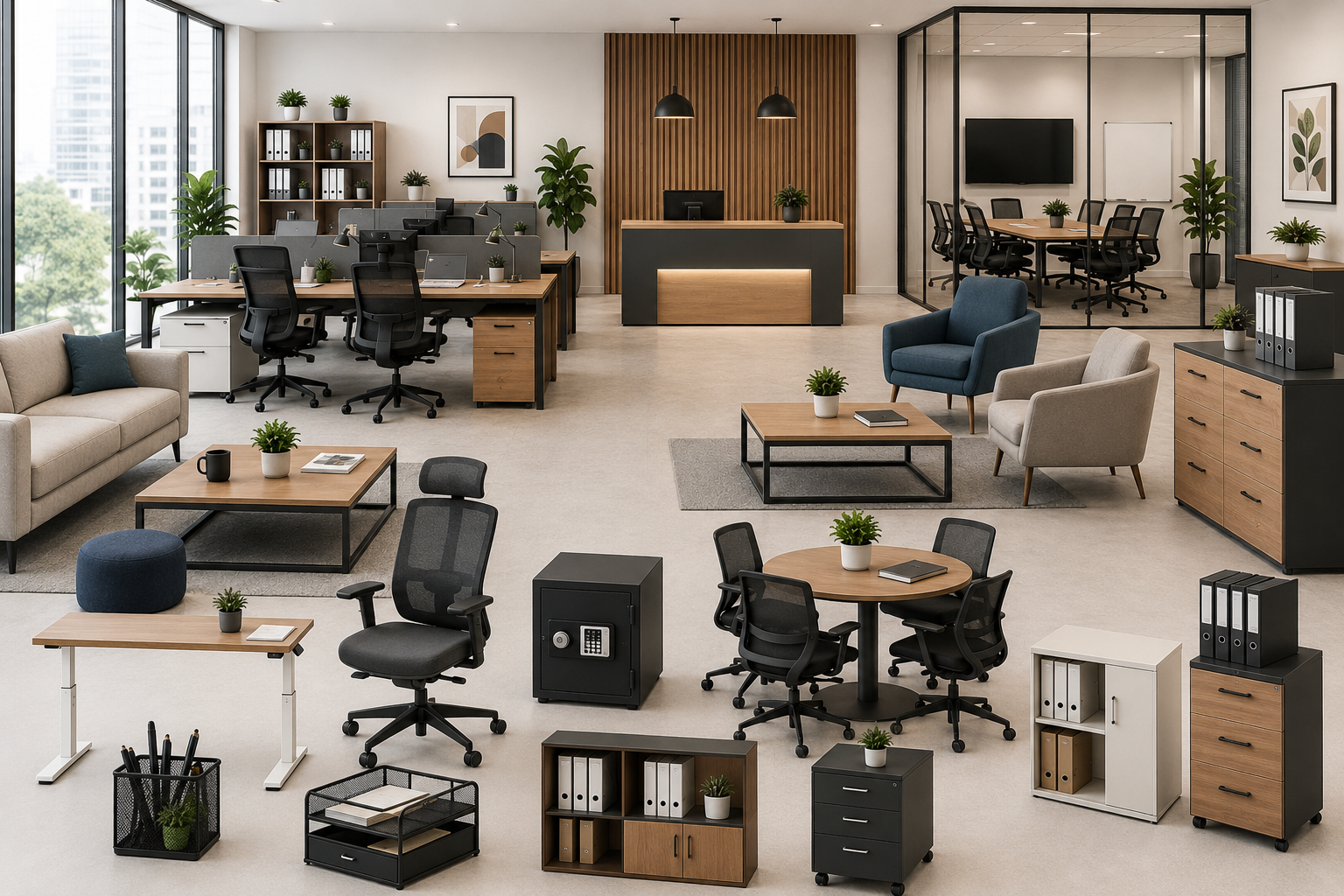
Every type of business office furniture is available at Shoppers Stop, from ergonomic workstations and executive seating to storage solutions and furniture for working together. To explore the full collection and find the right fit for your workspace, Buy Office Furniture in Kigali, Rwanda through Shoppers Stop today.
Frequently Asked Questions
Why is ergonomic office furniture important for businesses?
Ergonomic office furniture reduces physical strain, prevents injury, and keeps employees comfortable through long working hours. This leads to fewer absences, better focus, and higher long-term productivity, all of which are good for business.
What should I consider before buying office furniture?
Start with your team size, work style, and likely growth trajectory. Then consider ergonomics, space dimensions, brand aesthetic, storage needs, budget, and long-term flexibility. Buying without a clear plan leads to mismatched pieces that underserve the space.
How can office furniture improve productivity?
When the physical environment supports the body and organizes the workspace effectively, employees spend less energy managing discomfort and clutter. The result is better concentration, fewer errors, and consistently higher-quality output.
What type of office furniture is best for small offices?
Compact, multifunctional, and modular pieces work best in smaller spaces. Height-adjustable desks, wall-mounted storage, and flexible seating allow a small footprint to deliver full functionality without overcrowding.
How often should office furniture be replaced?
Quality commercial office furniture typically lasts between seven and fifteen years with proper care. Chairs may need replacement sooner if adjustability mechanisms or cushioning deteriorates. Rather than replacing wholesale, assess individual pieces for wear and replace them as needed.
What is the best office furniture style for modern workplaces?
That being said, there is no one right answer. The best style is the one that fits your brand, your work style, and your daily needs. The newest styles in office furniture tend to be clean, flexible, and focused on people. However, the best style for a business and its employees will vary.

Hiren Kapadia is the founder of Shoppers Stop, Kigali’s trusted name in office furniture solutions. Since 2007, he has been helping businesses and individuals create productive, comfortable, and stylish workspaces through modern design and reliable service.