Working from a dining chair feels fine for the first week. By week three, most people notice a stiff lower back or sore shoulders by mid-afternoon. Finding the best office chair for work from home isn’t about buying the most expensive option, it’s about choosing one that fits your body, your desk, and the hours you spend sitting at it.
This guide covers the seven features that matter most, how to match a chair to your desk, and a few common mistakes worth avoiding.
Key Takeaways
- The best office chair for work from home fits your body, your desk, and your daily routine, not just your budget.
- Seven features matter most: adjustable seat height, lumbar support, seat depth and cushioning, adjustable armrests, breathable material, recline function, and overall fit with your workspace.
- A chair only works well when it’s matched to your desk height, monitor position, and available legroom.
- Needs vary by routine. Full-time desk workers need more durability than someone working from home occasionally.
- Common mistakes include buying on looks alone, skipping a test sit, and ignoring how a chair fits your desk and room size.
- In warmer climates like Rwanda, breathable mesh and a compact frame usually outperform heavier fabric or leatherette chairs.
What Makes the Best Office Chair for Work From Home?
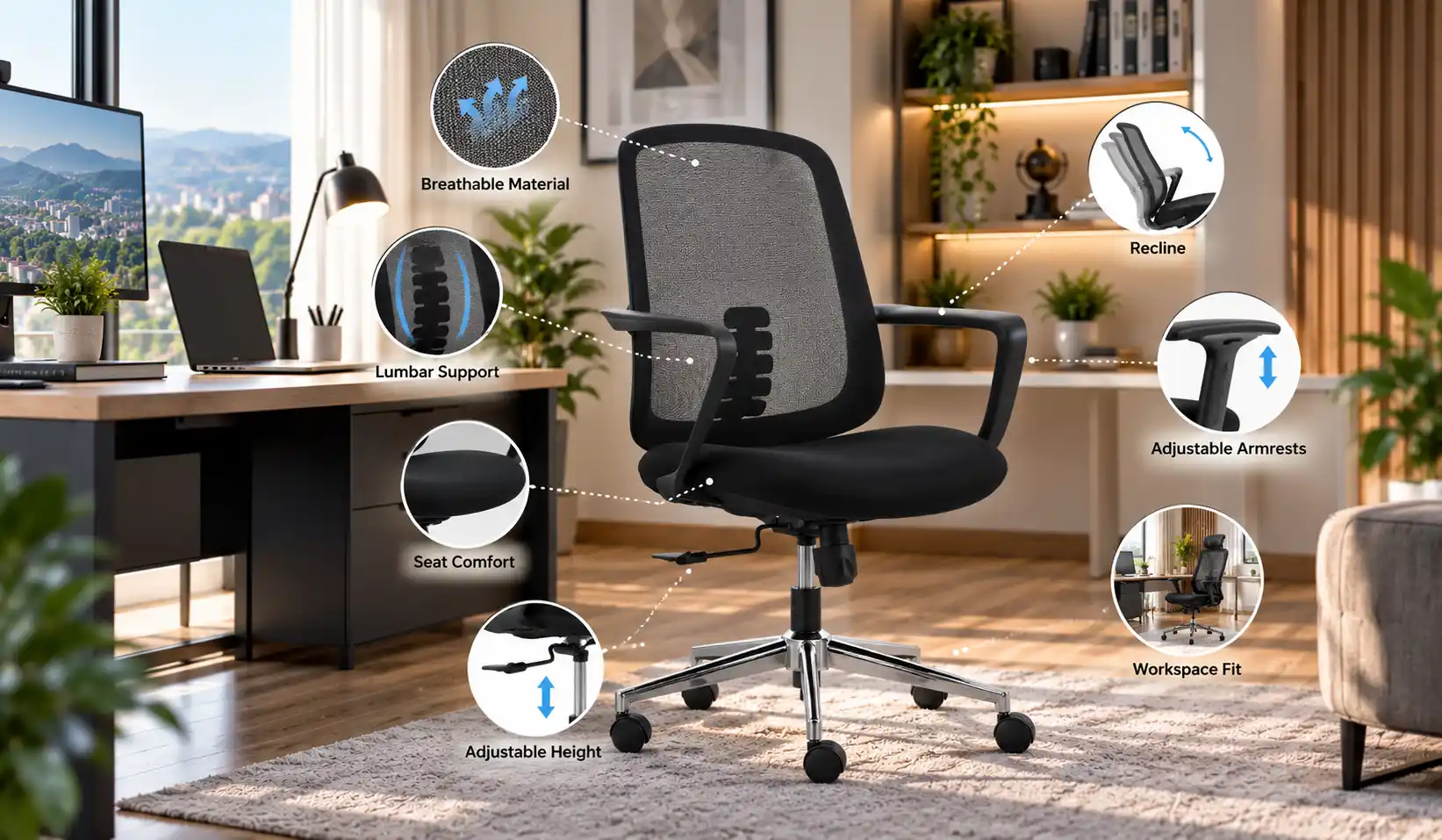
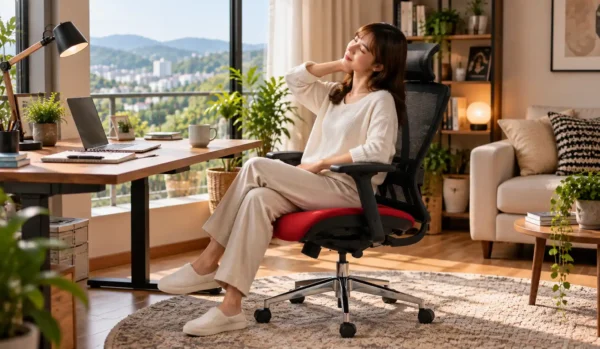
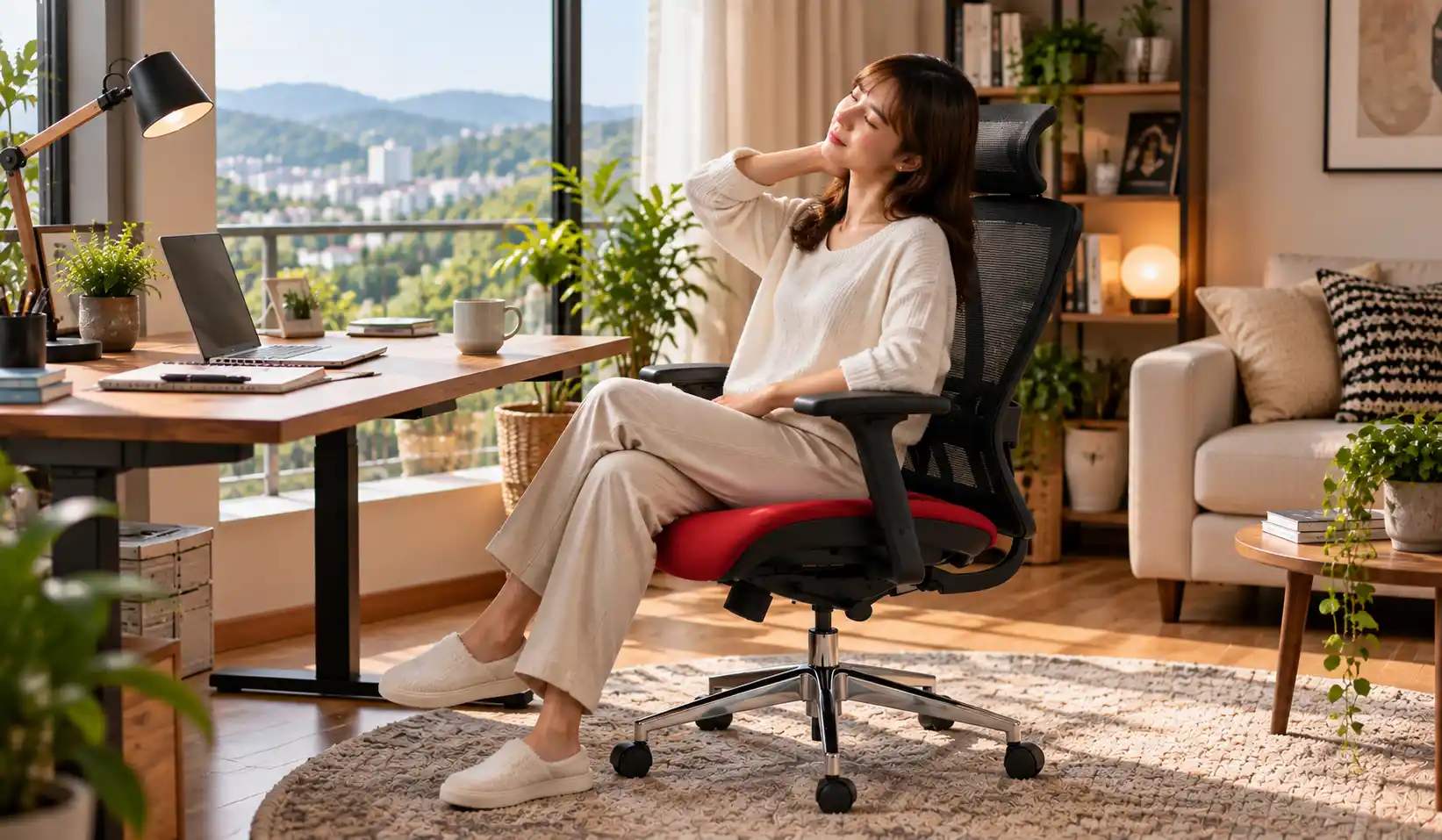
The best office chair for work from home should fit your body, desk, and daily working routine. Look for adjustable height, good lumbar support, comfortable seat depth, supportive armrests, suitable materials, and a useful recline function. The chair should also fit comfortably into your home-office setup, whether that’s a spare room or a corner of the living room.
A well-chosen chair from a range of ergonomic office chairs tends to check most of these boxes at once, but it still helps to know exactly what you’re looking for before comparing options.
7 Features to Look for in a Work From Home Office Chair
These seven features make the biggest difference to comfort and posture over a full working day.
1. Adjustable Seat Height
Your chair height should let your feet sit flat on the floor, with knees roughly level with your hips and forearms resting comfortably at desk height. If the chair sits too high or too low for your desk, no cushioning fixes the strain that builds up in your shoulders and wrists.
2. Supportive Lumbar Support
The lower back carries most of the load when sitting for long stretches, which is why office chairs for back support with proper lumbar contouring make such a difference. Look for a backrest that curves inward at the small of your back, ideally with height adjustment so it lines up with your spine.
3. Comfortable Seat Depth and Cushioning
Seat depth matters more than expected. Aim for a gap of two to four fingers between the seat edge and the back of your knees when sitting all the way back. Cushioning should hold its shape after a few hours, not flatten by lunchtime.
4. Adjustable Armrests
Armrests that move up, down, and sideways let you position your elbows close to your body while typing, taking pressure off your shoulders and neck. Fixed armrests that sit too high or too wide often force an awkward angle instead of a natural one.
5. Breathable and Suitable Material
Mesh backing keeps air moving and works well in warmer rooms. Fabric feels softer for longer sessions, while leatherette looks polished but can feel warm without air conditioning. The right choice depends more on room temperature than appearance.
6. Recline and Movement
Sitting completely still for eight hours is harder on your body than shifting position occasionally. A working recline function, with adjustable tilt tension, lets you lean back during a call without losing support.
7. Fits Your Home Office Setup
A chair that’s perfect on paper still needs to fit your space. Measure your desk area before buying, including how far the chair rolls back when you stand, so it doesn’t collide with a wall or bookshelf.
How to Match Your Office Chair With Your Home Desk
A great chair paired with the wrong desk height still leads to poor posture. Check these five points together rather than adjusting the chair alone.
- Chair height: elbows level with your desk surface when typing.
- Desk height: unusually low or high desks may need a specific chair range.
- Monitor position: top of the screen roughly at eye level.
- Keyboard position: close enough that elbows stay near your sides.
- Legroom: enough clearance for knees and feet to move freely.
Choosing an Office Chair for Different Work From Home Needs
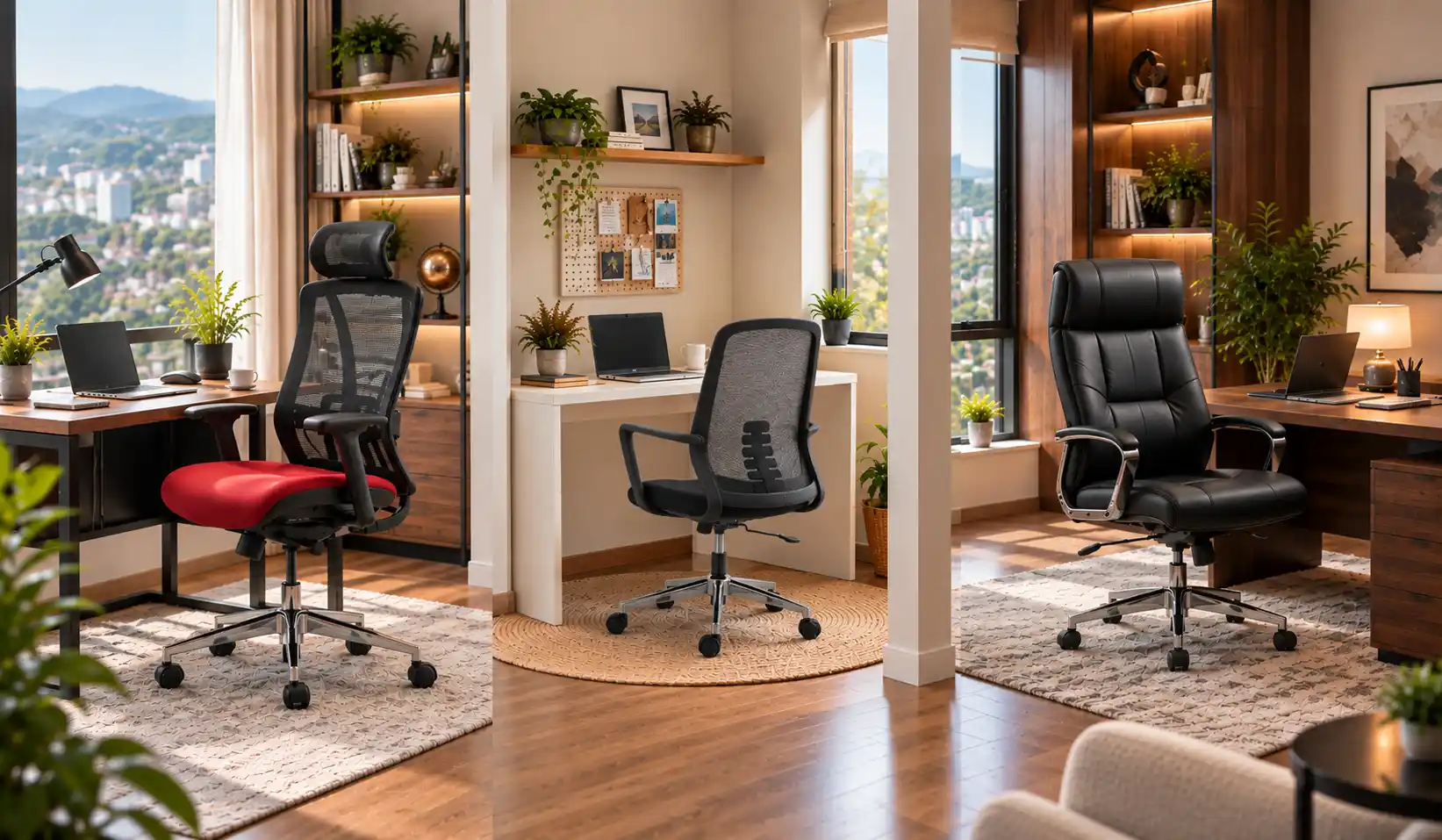
Not everyone working from home has the same routine, and needs vary accordingly.
Full-time desk workers should prioritize durability and full adjustability. The best office chairs for long hours are usually built with denser foam and sturdier frames.
- Small home offices: a compact base that tucks fully under the desk.
- Warm environments: mesh backing over fabric or leatherette.
- Frequent video calls: a stable, non-squeaky base and decent back support.
- Occasional remote work: a simpler, mid-range chair is often enough.
Common Mistakes When Choosing a Work From Home Chair
Here are some common mistakes to keep in mind when choosing a work from home chair:
- Buying on looks alone: a stylish chair that doesn’t adjust to your body still causes discomfort within weeks.
- Ignoring desk height: even a great chair can’t fix a mismatch with the wrong desk.
- Skipping a test sit: sit in the chair for a few minutes before buying, if possible.
- Overlooking room size: a large executive chair can overwhelm a small home office.
Office Chairs for Work From Home in Rwanda
Home offices in Kigali and across Rwanda often deal with warmer indoor temperatures for much of the year, which makes breathable mesh chairs a practical choice over heavier fabric or leatherette. Limited space in apartments also means a compact, adjustable chair usually works better than a bulky executive-style seat.
If you’re setting up or upgrading a home workspace locally, you can buy office chair in Kigali, Rwanda and compare a few options side by side before deciding.
Conclusion
The best office chair for work from home comes down to fit rather than price. Adjustable height, real lumbar support, comfortable seat depth, movable armrests, breathable material, a working recline, and a chair that suits your space all matter more than any single standout feature.
If you’re only fixing one thing today, start with lumbar support and seat height, since those two affect posture more than anything else here. Shoppers Stop Africa carries a range of ergonomic options built for daily home-office use, worth a look once you know which features matter most to you.
Frequently Asked Questions
1. What makes a good work from home chair?
A good work from home chair adjusts to your body rather than forcing you to adapt to it. Adjustable height, real lumbar support, and a seat depth that fits your legs matter more than style or price.
2. How much should I spend on a home office chair?
It depends on how many hours you sit each day. Full-time remote workers benefit from investing more in durability and adjustability, while occasional home workers can usually get by with a simpler, mid-range option.
3. Can I use a gaming chair for home office work?
Some gaming chairs offer decent lumbar support and adjustability, but many prioritize bold styling over ergonomics. Check for the same seven features covered above rather than assuming a gaming chair is automatically office-ready.
4. How often should I replace my office chair?
Most office chairs last three to five years with daily use before cushioning flattens and mechanisms loosen. If the seat no longer holds its shape or the recline feels unstable, it’s time to replace it.
5. Is a mesh chair better than a cushioned chair for a home office?
It depends on your room and personal preference. Mesh suits warmer spaces and longer sitting sessions, while cushioned fabric can feel softer in cooler, air-conditioned rooms. Neither is universally better, only better suited to different conditions.

Hiren Kapadia is the founder of Shoppers Stop, Kigali’s trusted name in office furniture solutions. Since 2007, he has been helping businesses and individuals create productive, comfortable, and stylish workspaces through modern design and reliable service.