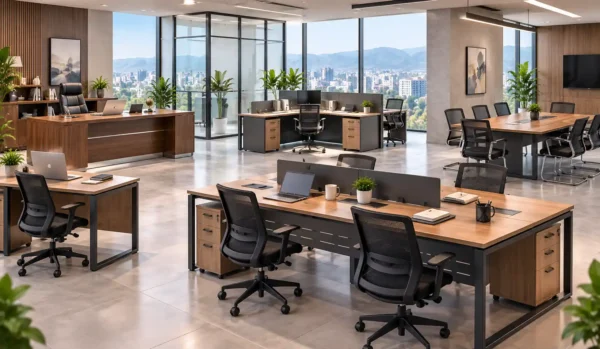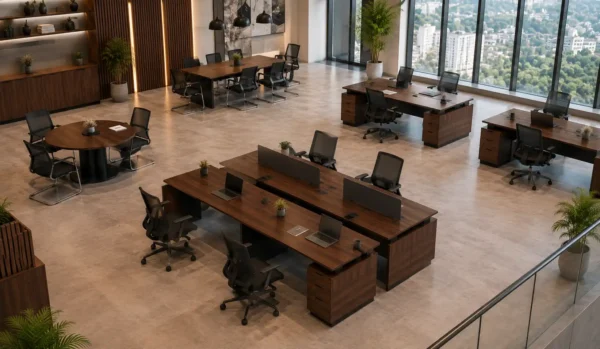
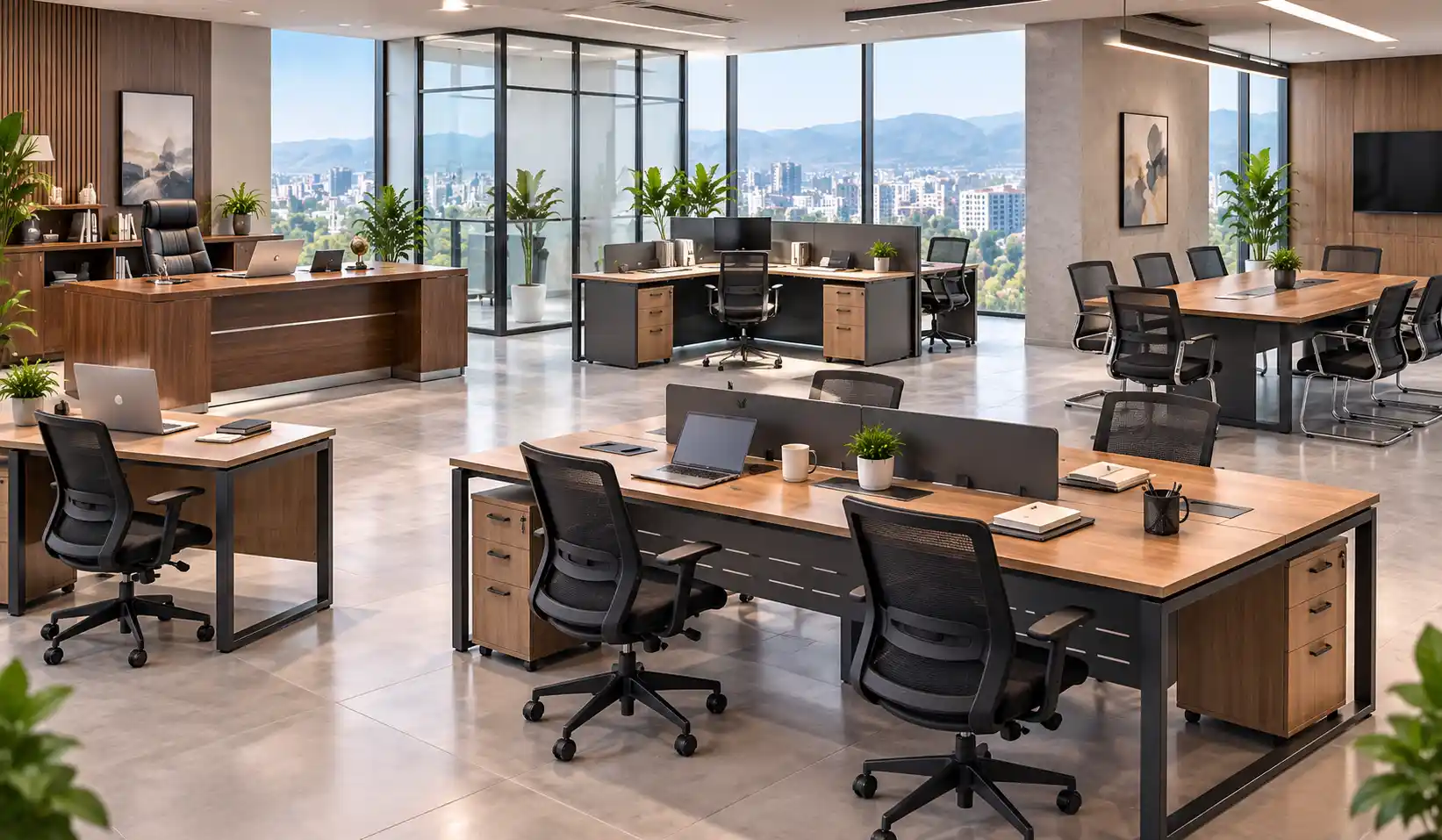
A table does more than hold a laptop and a coffee cup. It shapes how people work, how a room feels, and how efficiently a team moves through its day. Good office table design ideas start with one simple question: what is this table actually for? An executive who needs quiet, focused space has very different requirements than a five-person team sharing ideas across the same surface.
This guide walks through practical table designs for different workspaces and what to consider before choosing one.
Key Takeaways
- The right office table design starts with the work being done at it, not just the available floor space or budget.
- Different roles call for different shapes. Executive, L-shaped, compact, collaborative, and meeting tables each solve a different workplace problem.
- Choosing a table means balancing available space, number of users, work surface needs, storage, and cable management together, not one at a time.
- Size and layout affect comfort and movement as much as the table itself, so legroom and spacing deserve attention before you buy.
- Modern features like built-in cable management and modular designs make a table more useful over time, not just on day one.
- Office needs vary widely across Rwanda, from small Kigali startups to larger, multi-department offices, so table design should match the actual business, not a generic template.
What Makes a Good Office Table Design?
A well-designed office table balances six things at once: functionality, size, layout, comfort, storage, and appearance. Get the balance right and the table disappears into the background of a productive day.
- Functionality: supports the actual tasks happening at it, from focused writing to video calls.
- Size: large enough for the work without crowding the room.
- Layout: positioned so people can move and reach shared equipment easily.
- Comfort: the right height and surface depth for the chairs it’s paired with.
- Storage: enough built-in or nearby storage to keep the surface clear.
- Appearance: a finish that fits the tone of the office, formal or casual.
Office Table Design Ideas for Different Workspaces
These five designs cover most of the situations a growing office runs into, from private offices to shared team spaces.
Executive Office Tables
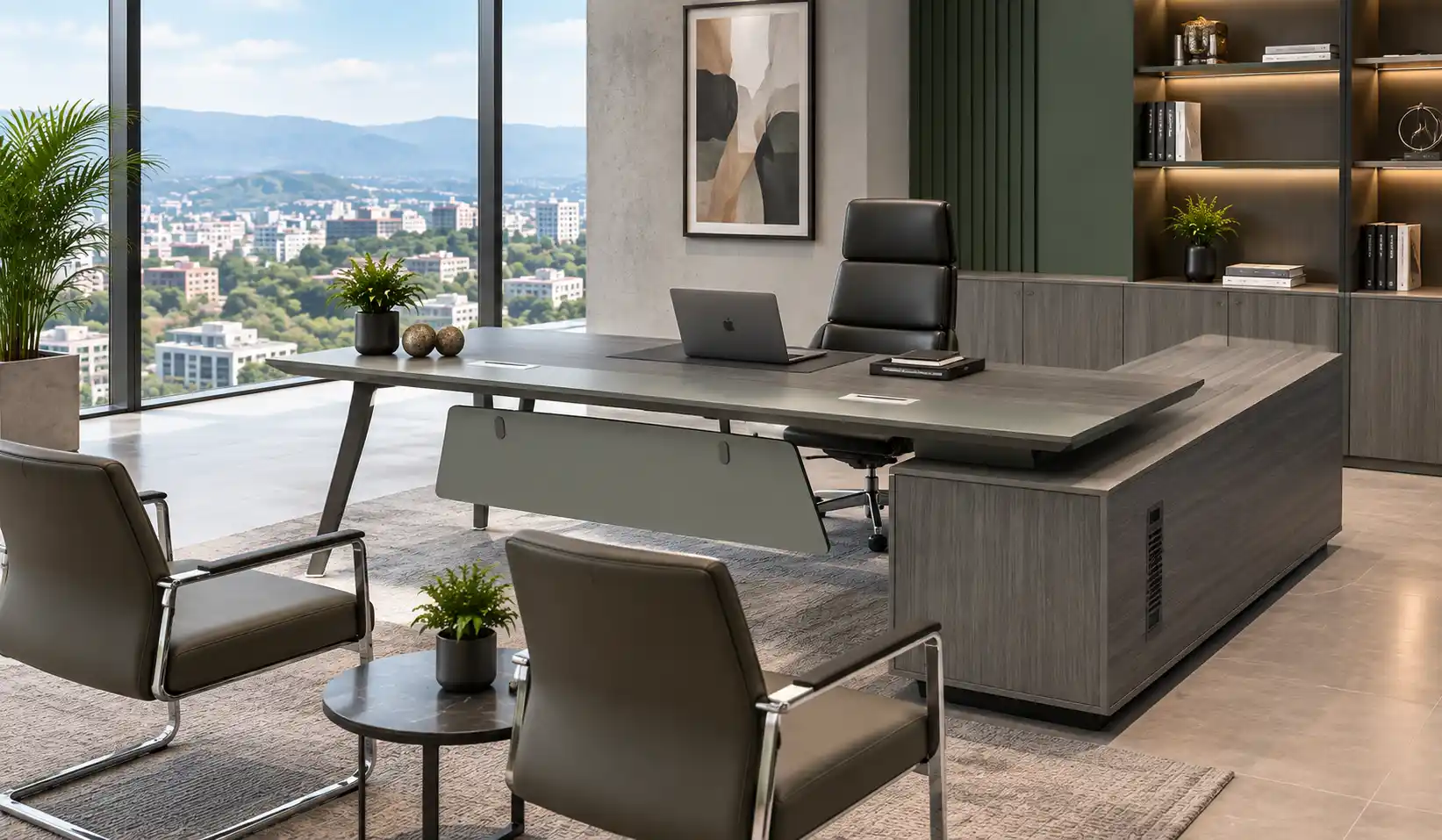
Executive tables are built for private offices and management areas where a single person needs a substantial, dedicated work surface. They favor solid, formal finishes and enough surface area for documents, a laptop, and face-to-face meetings. This design suits a director’s office or a client-facing consultation space.
L-Shaped Office Tables
An L-shaped table gives one person two distinct work zones on a single surface, often one side for a monitor setup and the other for paperwork. This design suits roles that switch between screen work and hands-on tasks, and makes efficient use of corner space that would otherwise go unused.
Compact Office Tables
Where floor space is limited, a compact table keeps a workstation functional without overwhelming the room. These designs work well in smaller Kigali offices or any space where several tables need to fit without feeling crowded. The trade-off is less surface area, so compact tables work best paired with good vertical storage.
Collaborative Office Tables
Teams that work together throughout the day benefit from a shared surface rather than individual desks pushed into a cluster. A well-designed office workstation setup gives each person their own zone while keeping the group close enough for quick conversations, making it a natural fit for sales teams, design pods, or any group that collaborates more than they work in isolation.
Meeting and Conference Tables
Meeting tables are designed around the room, not the individual, with a shape and size that supports discussion and group decision-making. Oval and rectangular shapes remain most common because they keep sightlines open across the table.
Quick Comparison of Office Table Designs
Here’s how the five designs stack up at a glance, useful for narrowing down options before you start browsing specific products.
| Design | Best For | Typical Size | Ideal Team Size |
| Executive | Private offices, client meetings | Large, formal | 1 person |
| L-Shaped | Mixed screen and paperwork tasks | Medium to large | 1 person |
| Compact | Small offices, satellite branches | Small | 1 person |
| Collaborative | Teams working closely together | Large, modular | 3 to 8 people |
|
Meeting or Conference
|
Discussions, presentations, group decisions | Large, oval or rectangular | 4 to 12+ people |
How to Choose the Right Office Table Design
Once you know roughly which category fits your team, a few practical questions narrow the choice further.
- Available space: measure the room, not just the table, including walking paths.
- Number of users: one person, a pair, or a full team changes the shape you need.
- Type of work: screen-based, paperwork-heavy, or a mix of both.
- Required work surface: how much space is genuinely needed.
- Storage needs: built-in drawers, nearby cabinets, or none at all.
- Cable management: how many devices need power and data access.
- Office style: formal and traditional, or modern and minimal.
- Future expansion: whether the role is likely to outgrow this table soon.
Office Table Size and Layout Matter
Table size and room layout affect daily comfort as much as the table’s design does.
- Work surface: enough depth and width for the tasks at hand.
- Legroom: clearance underneath that accounts for the chair used.
- Movement: enough space to get up, pass by, or roll a chair back.
- Desk-to-chair relationship: table height should work with the chairs, not fight them.
- Employee spacing: enough distance between tables to avoid a cramped feel.
Modern Office Table Features to Consider
A handful of modern features make a table more practical without changing its basic design.
- Cable management: built-in grommets or channels that keep cords out of sight.
- Built-in storage: drawers or shelving that reduce the need for separate modern office furniture.
- Durable materials: surfaces that hold up to daily use without showing wear.
- Practical shapes: forms that fit the room and the work, not just looks.
- Easy maintenance: finishes that are simple to clean and resist staining.
- Modular or flexible designs: tables that reconfigure as team needs change.
Our guide to smart office table features goes deeper into cable management and storage specifically.
If you’re deciding between a traditional look and something more contemporary, our breakdown of modern vs classic office tables covers that comparison in more detail.
Office Table Design Ideas for Businesses in Rwanda
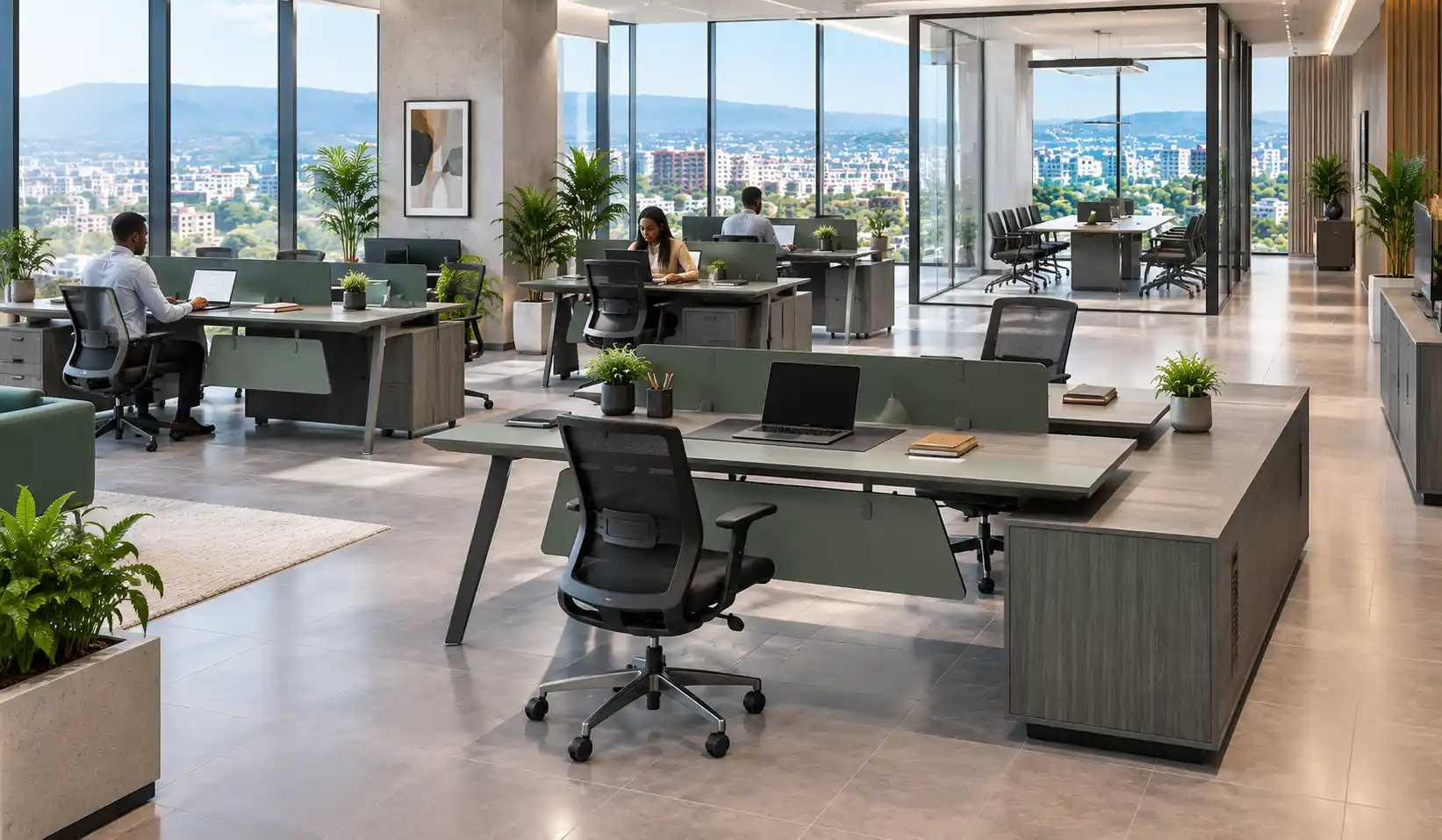
Office needs across Rwanda vary by business size. A small Kigali startup in a shared office usually needs compact, flexible tables that can be rearranged as the team grows, while a larger company with dedicated departments has more room for executive and conference setups.
Matching table design to actual daily use matters more than following a trend. Browsing Office Table in Rwanda options side by side makes it easier to compare shapes and sizes against your office layout.
Common Office Table Design Mistakes to Avoid
Here are some common office table design mistakes to avoid:
- Choosing size based on the room’s appearance rather than the work happening at the table, which often leads to a table that looks right but functions poorly.
- Prioritizing style over layout, resulting in a striking table that doesn’t leave enough room for chairs, cables, or movement.
- Buying one large design for every role, when a mix of executive, compact, and collaborative tables usually serves a growing office better.
- Ignoring future headcount, which means outgrowing a table or workstation layout within a year of buying it.
- Overlooking cable and power access until after the table arrives, leading to messy, visible cords that undercut an otherwise modern design.
How Office Table Design Shapes Team Culture?
Table design does more than affect comfort. It quietly shapes how people interact throughout the day. Rows of identical compact tables tend to encourage focused, independent work, while collaborative and communal table designs naturally invite more conversation and quicker problem-solving between colleagues.
Neither approach is universally better. A finance team handling detailed, heads-down work may benefit from more separation, while a marketing or design team often performs better around a shared surface where ideas can move quickly between people. Thinking about this dynamic, rather than just square footage, often leads to a more useful final decision.
Conclusion
Good office table design ideas come down to matching the table to the work, the room, and the people using it. Executive, L-shaped, compact, collaborative, and meeting tables each solve a different problem, and the right layout and features make daily work noticeably smoother once the basics are right.
If you’re weighing options for your own office, start with how the space is actually used, then narrow down from there. Shoppers Stop Africa carries a range of office table designs suited to different workspace needs, worth a look once you know which direction fits your team.
Frequently Asked Questions
1. What is the best office table design for a small office?
Compact or L-shaped tables tend to work best in small offices, since they make efficient use of limited floor space while still offering enough surface area for daily tasks.
2. How do I choose between an executive table and a standard workstation?
Executive tables suit roles that need a dedicated, formal space for meetings and documents, such as management or client-facing positions. Standard workstations suit most other day-to-day roles, especially where budget and space are more limited.
3. Are collaborative tables suitable for every team?
Not necessarily. Collaborative tables work well for teams that communicate frequently throughout the day, but roles that need quiet, focused work may perform better with more separated seating.
4. What size should a meeting table be?
Meeting table size should match the room and the typical number of attendees, with enough space per person to avoid a cramped feel. Oversized tables in small rooms are a common mistake worth avoiding.
5. Can office table designs be mixed within the same office?
Yes, and it’s often the better approach. Most growing offices benefit from a mix, such as compact tables for individual desks, a collaborative table for one team, and a single meeting table for group discussions.

Hiren Kapadia is the founder of Shoppers Stop, Kigali’s trusted name in office furniture solutions. Since 2007, he has been helping businesses and individuals create productive, comfortable, and stylish workspaces through modern design and reliable service.