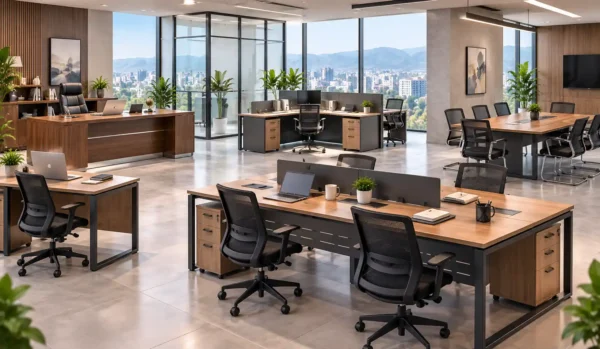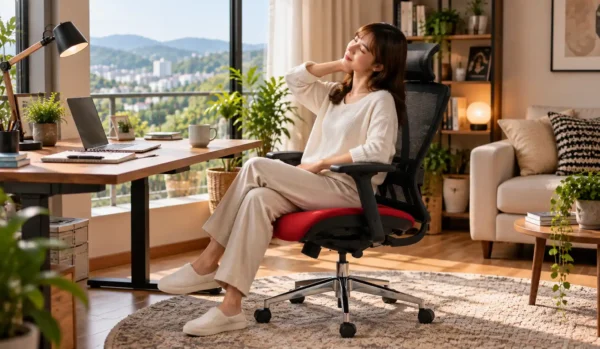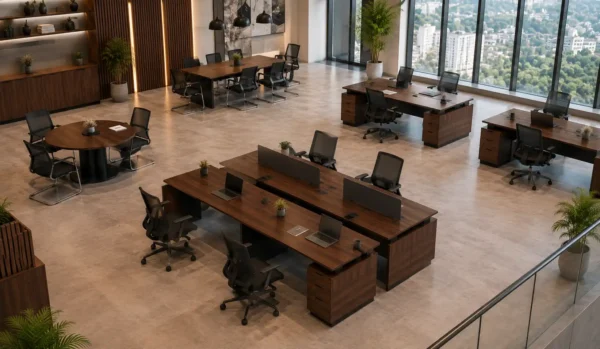
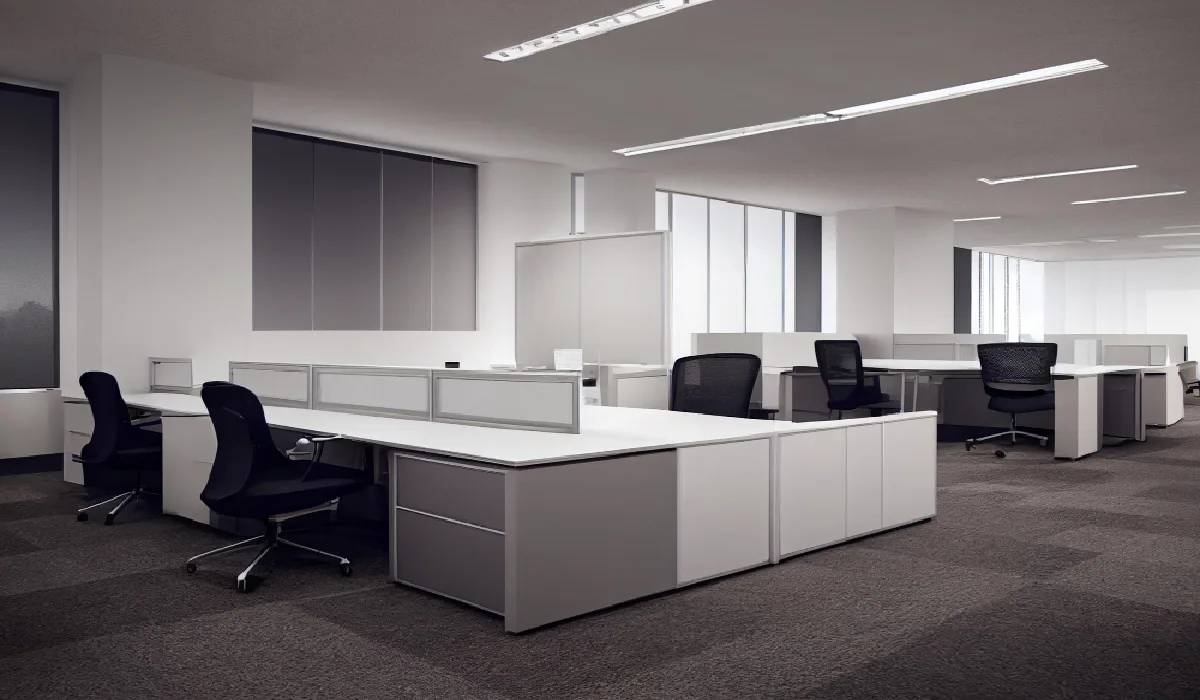
The right office table affects productivity, comfort, and how your workspace is perceived, not just design. When comparing Modern vs Classic Office Tables, the choice often depends on functionality, aesthetics, and the kind of work environment you want to create.
Whether you’re setting up a corporate office or a home workspace, understanding different office table styles can help you make a smarter investment.
Key Takeaways
- Choosing between modern and classic office tables isn’t just a matter of style; it also depends on your work environment, your brand’s image, and your own personal tastes.
- Modern office desks are ideal for compact spaces, tech integration, and fast-paced work setups.
- Classic office desks or a traditional office desk bring timeless design, durability, and a strong executive presence.
- Classic desks offer structure and storage, while minimalist modern setups keep things simple. Pick the one that works best for you based on how you work.
- Blending both styles (modern and classic office tables) is a growing trend in office furniture design.
- Use modern designs for office tables for small spaces and classic or executive desk options for larger offices.
- Matching your desk with chairs and décor enhances overall office table aesthetics and creates a more cohesive workspace.
- The right office table should be comfortable, help you work efficiently, and look good for years to come, not just today.
Understanding Modern vs Classic Office Tables
At a basic level, the difference between modern and classic tables lies in design philosophy.
Modern office desks focus on simplicity, minimalism, and efficiency. They often feature clean lines, neutral colors, and functional layouts that support technology-driven work.
Traditional office desk, on the other hand, emphasize craftsmanship, elegance, and timeless appeal. These Classic Style Office desks often include intricate detailing, rich wood finishes, and a more authoritative presence.
What Defines Modern Office Tables?
Modern office tables are built for today’s fast-paced, flexible work environments. They prioritize usability and space optimization.
Here are some of the key features of modern office tables:
- Sleek and minimal designs
- Lightweight materials like engineered wood, metal, or glass
- Built-in cable management and tech-friendly features
- Ideal for office tables for small spaces
- Often paired with ergonomic seating
Modern designs align closely with current workspace furniture trends, where flexibility and collaboration are key.
If you’re exploring office table designs for startups or home offices, modern desks are often the go-to option due to their versatility.
What Defines Classic Office Tables?
Classic office desks reflect tradition, authority, and durability. They are often seen in executive cabins or formal office setups.
Here are some of the key features of classic office tables:
- Solid wood construction
- Detailed craftsmanship and carved designs
- Rich finishes like mahogany, walnut, or oak
- Built-in storage like a traditional desk with drawers
- Larger, more commanding presence
These classic office desks are ideal for professionals who want their workspace to reflect stability and prestige.
Modern vs Traditional Office Furniture Trends
The debate around modern vs. traditional office furniture trends has evolved over the years. Today, businesses are no longer strictly choosing one over the other.
Modern offices lean towards:
- Open layouts
- Collaborative spaces
- Multi-functional furniture
Traditional setups still dominate in:
- Executive offices
- Law firms and corporate boardrooms
- Businesses that value hierarchy and structure
Interestingly, many companies are now blending both to create modern classic office tables, combining clean lines with premium materials.
Which Office Table Style Is Better for Productivity?
When it comes to the best office table style for productivity and design, the answer depends on your work style.
Modern office desks enhance productivity by:
- Reducing clutter
- Supporting ergonomic setups
- Maximising limited space
Classic desks improve productivity by:
- Offering ample storage
- Creating a distraction-free, focused environment
- Providing a sense of permanence and organisation
For creative and collaborative roles, modern desks tend to perform better. For leadership roles or work requiring deep focus, classic desks often have the edge.
Read More: Electric vs Manual Height Adjustable Tables
Office Table Design Ideas for Small and Large Spaces
Choosing between types of office tables also depends on your available space.
For Small Spaces
- Compact modern desks
- Wall-mounted or foldable designs
- Multi-purpose workstations
If you are in search of space-saving desk designs for small offices, remember to look online, as you will find multiple options to choose from among the best brands.
For Large Spaces
- Executive classic desks
- L-shaped or U-shaped configurations
- Statement tables that enhance office table aesthetics
If you’re working with limited space, modern designs are far more practical. However, larger offices can benefit from the elegance of classic office tables for sale.
Tips for Matching Office Tables with Chairs and Décor
Creating a cohesive workspace means aligning style, comfort, and functionality. Here are some practical tips to help you bring everything together:
Here are some quick tips:
Match desk style with the right chair
Pair modern office desks with ergonomic, minimal chairs in neutral tones. For classic office desks or a traditional desk with drawers, choose high-back leather or upholstered chairs for a more refined look.
Keep décor aligned with the desk style
Modern setups work best with clean, minimal décor like sleek lamps or small indoor plants. Classic setups benefit from warmer elements like wooden accents, framed artwork, and soft lighting.
Maintain a consistent color palette
If you want your office tables and chairs to look like they belong together, stick to a set of colors. This could be black and white, earthy wood tones, or soft pastels.
Balance materials thoughtfully
If your desk includes metal, glass, or wood, reflect those materials subtly in other elements like shelves, chairs, or accessories to enhance overall office table aesthetics.
Prioritise comfort and usability
While design matters, always choose furniture that supports your daily work. Ergonomics and functionality should go hand in hand with your chosen office furniture design.
Avoid over-cluttering the workspace
Keep only essential items on your desk. A clean layout improves focus and complements both modern and classic office table styles.
These small adjustments can elevate your overall office furniture design significantly.
Can You Mix Modern and Classic Styles?
Yes, and more and more people are doing this.
Blending modern and classic styles allows you to:
- Maintain functionality while adding character
- Create unique, personalised workspaces
- Adapt to both formal and informal work settings
For example, a modern desk with classic wooden accents or a traditional desk paired with modern lighting can strike the perfect balance. If you are seeking Office Furniture in Kigali, Rwanda, remember you need to look for the best brands.
Making the Right Choice for Your Workspace
Before choosing between Modern vs Classic Office Tables, consider the following:
- Nature of your work
- Available space
- Storage requirements
- Brand image and office culture
- Budget
If you’re seeking premium Executive desk options or planning to buy office Tables in Kigali, Rwanda, brands like Shoppers Stop offer a wide range of office tables for sale, catering to both modern and classic preferences.
These resources can help you dive deeper into selecting the right furniture for your needs.
Frequently Asked Questions
What is the difference between modern and classic office tables?
Modern tables focus on minimalism and functionality, while classic tables emphasize design, craftsmanship, and traditional aesthetics.
What is the difference between a traditional office and a modern office?
Traditional offices are more structured and formal, whereas modern offices prioritize flexibility, collaboration, and open layouts.
Which office table style is better for productivity?
Modern desks are better for flexibility and tech use, while classic desks are ideal for focused, uninterrupted work.
Can modern and classic office tables fit in the same office?
Yes, combining both styles can create a balanced and visually appealing workspace.
Are modern office tables suitable for home offices?
Absolutely. Modern desks are perfect for home offices due to their compact and functional design.
How do I choose between a modern and classic office table for my workspace?
Consider your work type, space, storage needs, and overall design preference before making a decision.
Final Thought
The choice between modern and classic office tables isn’t about which is better—it’s about what works best for your workspace.
Modern desks bring efficiency, flexibility, and a contemporary feel, making them ideal for dynamic environments. Classic desks, on the other hand, offer elegance, durability, and a sense of authority that never goes out of style.
If you want the best of both worlds, consider hybrid designs that combine functionality with timeless aesthetics. Ultimately, the right office table should support your work style, enhance productivity, and reflect your professional identity.

Tinku Kapadia is a workspace design enthusiast with a strong focus on ergonomic and functional office furniture. With years of experience exploring modern furniture trends, she shares insights to help businesses and individuals create comfortable, productive, and stylish work environments.