The modern workplace has undergone a dramatic transformation. Hybrid schedules, open-plan layouts, and hours spent in front of screens have redefined what it means to work productively. Yet amid all this change, one foundational truth remains: the physical environment where employees spend their working hours has a direct and measurable impact on how they feel, how they concentrate, and how well they perform.
At the centre of that environment is the humble office table. Ergonomic office tables support the body rather than hinder it. For businesses serious about long-term performance, investing in the right ergonomic workspace setup is no longer optional. It is one of the smartest decisions a company can make.
Key Insights
- Ergonomic office tables are made to fit the user’s body shape by being adjustable, roomy, and stable.
- They stop the most common injuries at work, like back pain, neck strain, and conditions caused by repetitive stress that cost companies work days.
- Height-adjustable tables are a big deal because switching between sitting and standing relieves stress, boosts posture, and keeps your energy up.
- Comfort directly increases output; improvements to ergonomics can boost output by up to 12%.
- It’s an investment, not a cost, because fewer absences and higher retention far outweigh the cost up front.
- Your company’s values show in the furniture you choose. Ergonomic workspaces boost morale, keep employees interested, and keep good employees.
- They are ergonomic and can be used in any office size, whether it’s small, modular, or full-floor.
- When choosing an ergonomic desk, you should think about the height range, surface depth, load capacity, stability, and type of adjustment.
What Are Ergonomic Office Tables?
The science of designing furniture to match the human body’s natural posture, proportions, and movement patterns is called office table ergonomics. Unlike standard desks, which are typically fixed at a single height and built to a generic specification, ergonomic office desks are built around the user.
Key features typically include adjustable height mechanisms that accommodate different body types and working preferences, generous surface depth to position monitors at a safe viewing distance, smooth cable management to reduce clutter and distraction, and stable, level surfaces that keep keyboards, screens, and peripherals correctly aligned. When all these elements come together, the result is a comfortable office workstation that supports productivity from the first hour of the day to the last.
The Health Case: Why Posture and Pain Cannot Be Ignored
Sitting at a poorly designed desk for eight or more hours a day takes a serious toll on the body. Office furniture design can prevent back pain, neck stiffness, shoulder tension, carpal tunnel syndrome, and repetitive strain injuries, the most common workplace health complaints.
Ergonomic office tables directly address the root causes of these conditions. By keeping the spine in its natural curve, elbows at a comfortable angle, and wrists relaxed, they reduce the cumulative physical strain that leads to chronic pain and injury over time.
Height adjustable office tables take this a step further. By allowing employees to alternate between sitting and standing throughout the day, they counteract the damaging effects of prolonged static posture. Standing desks improve posture, reduce back pain, and boost mood and focus over weeks and months of regular use, according to National Library of Medicine research. For organisations managing healthcare costs and absenteeism, this matters enormously. Fewer workplace injuries mean reduced medical expenses and fewer working days lost to preventable conditions.
Ergonomics and Productivity: The Performance Connection
The link between office desk ergonomics and workplace output is both logical and well-documented. When employees are physically comfortable, they experience fewer distractions from pain or discomfort, maintain concentration for longer stretches, and produce higher-quality work. When they are not, cognitive bandwidth that should be directed at the task gets absorbed by managing physical strain.
Studies show that ergonomic assessments and workplace improvements can boost productivity by 12%, a significant figure for any large business. Ergonomic office tables contribute to this in several concrete ways: they reduce the number of disruptive micro-breaks caused by discomfort, create a more organised and clutter-free surface that aids focus, and support a more structured and intentional working posture that keeps employees alert.
Office productivity furniture is sometimes viewed as a cost rather than an investment. The evidence consistently tells a different story. Ergonomic office desks are one of the highest-return purchases a business can make due to reduced absenteeism, staff turnover, and daily output.
Workplace Wellness Furniture: A Statement About Company Culture
The furniture in an office communicates something about an organisation’s values. Ergonomic office tables show that the health and safety of workers is a priority, not just in HR policies but also in the way the office is set up. A lot of employers don’t understand how important this is.
When employees feel that their health and comfort are genuinely considered, morale improves, engagement rises, and people are more likely to stay. Companies that buy wellness furniture for the workplace consistently see higher employee satisfaction scores and lower rates of employees leaving on their own. Both of these effects have a measurable cost benefit.
As workspace furniture trends continue to shift toward human-centred, wellness-focused design, businesses that adopt ergonomic solutions early position themselves as employers of choice. In competitive hiring markets, the physical quality of a workspace is a real differentiator for skilled professionals evaluating where they want to work.
Ergonomic Office Table Designs for Every Workspace
A widespread misconception is that ergonomic office tables are oversized, clinical-looking pieces suited only to large corporate environments. Modern office tables prove the opposite. There are a lot of different styles, sizes, and configurations of modern office tables, so businesses of all sizes can find ways to make their workers more comfortable.
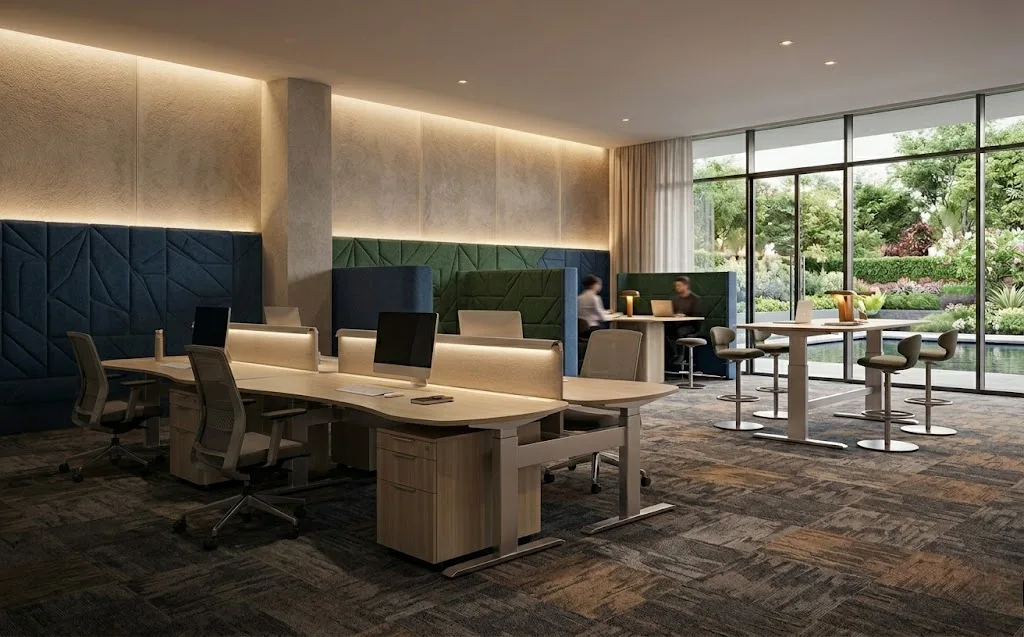
Popular options include compact height-adjustable desks well-suited to smaller offices or hot-desking setups, L-shaped ergonomic Comfortable office workstations that maximise corner space while providing generous surface area, modular benching systems that can be reconfigured as teams grow and change, and sit-stand collaborative tables designed for open-plan environments where movement is encouraged. Whether furnishing a boutique co-working space or a multi-floor headquarters, businesses can find ergonomic office tables that fit their footprint, budget, and interior aesthetic without any compromise on health benefits.
Businesses looking to explore quality options can Buy Office Tables in Kigali, Rwanda through Shoppers Stop, where a carefully curated range of modern ergonomic office tables is available to suit diverse workspace needs and styles.
Choosing the Right Ergonomic Office Table: What to Look For
Not all office table designs deliver the same ergonomic benefits. When selecting ergonomic office desks for a team, there are several factors worth evaluating carefully.
The height range that can be adjusted is very important. The desk should be able to comfortably fit people at both ends of the height range, not just the average. Surface depth matters too; monitors should sit at arm’s length, with the screen at or just below eye level, to prevent neck strain. Load capacity is worth checking, particularly for setups involving dual monitors, docking stations, or heavy equipment. Equally important is the stability of the build; a surface that wobbles makes ergonomic positioning harder and is a distraction.
The adjustment mechanism itself deserves attention. Electric height adjustable tables offer effortless transitions between sitting and standing positions at the push of a button, making it far more likely that employees will actually use the adjustment throughout the day. Manual options require more effort but carry a lower price point. For a full breakdown, see our comparison of Electric vs Manual Height Adjustable Tables.
Finally, aesthetics play a role. Modern office furniture should complement the overall office environment. It’s not necessary for an ergonomic table to look bad in order to be useful. The best office table designs of today do both very well. For those weighing contemporary against traditional options, our guide on Modern vs Classic Office Tables offers a useful starting point.
Conclusion
Ergonomic office tables are far more than a furniture upgrade. They represent a fundamental commitment to building workplaces where people can do their best work without paying a physical price for it. There is a lot of evidence that the benefits are wide-ranging and include fewer injuries, better health, higher productivity, and keeping employees longer.
As workplace wellness furniture becomes an expectation rather than an exception, businesses that act now gain a meaningful advantage: healthier teams, lower costs, and a culture of care that attracts and retains exceptional people.
Shoppers Stop offers a comprehensive range of ergonomic office tables designed for the demands of the modern workplace. Explore the full collection to find the right fit for your team, your space, and your ambitions.
Frequently Asked Questions
What is an ergonomic office table?
An ergonomic office table is a workstation designed to support the body’s natural posture during prolonged work. It typically features adjustable height settings, adequate surface depth, and a layout that minimises physical strain on the back, neck, shoulders, and wrists.
Why are ergonomic office tables important?
They reduce the risk of musculoskeletal injuries, improve comfort during long working hours, and contribute to greater focus and productivity. Organisations that invest in ergonomic workspace setups also benefit from lower absenteeism and improved staff retention.
Are height adjustable desks better for office work?
In most cases, yes. Height adjustable office tables allow employees to alternate between sitting and standing, reducing the strain of prolonged static postures, supporting better circulation, and helping maintain energy and concentration levels throughout the day.
Can ergonomic office tables improve productivity?
Absolutely. Physically comfortable employees experience fewer distractions, sustain concentration more effectively, and consistently produce higher-quality work. Research suggests ergonomic improvements can increase productivity by as much as 12%.
Are ergonomic office tables suitable for small offices?
Yes. Many types of ergonomic office tables, like slim-profile adjustable desks, wall-mounted options, and modular workstations, are made to fit into small spaces. They offer all the benefits of ergonomics without taking up a lot of room.
What should I look for in an ergonomic office desk?
Prioritise height adjustability range, surface depth, load capacity, build stability, and ease of adjustment. The table should comfortably support the user’s height and their equipment setup, with minimal reaching, twisting, or awkward positioning required.

Hiren Kapadia is the founder of Shoppers Stop, Kigali’s trusted name in office furniture solutions. Since 2007, he has been helping businesses and individuals create productive, comfortable, and stylish workspaces through modern design and reliable service.