A well-designed reception area does more than just welcome guests; it orchestrates how every visitor, client, or employee interacts with your company from their very first step inside. Finding the best reception desk placement for office spaces isn’t just about aesthetics; it’s about guiding movement effortlessly. When visitors instantly see where to check in, confusion disappears. A thoughtful reception setup to reduce crowding and confusion includes clear pathways, intuitive furniture arrangement, and technology-assisted check-in systems, ensuring every guest feels welcomed and directed from the moment they enter.
Whether it’s a small office reception desk for a startup or large office reception furniture for a corporate HQ, every reception needs a character. Today we’ll explore Types of Receptions and how different lobby and reception designs area layouts and furniture choices affect visitor flow.
Key Takeaways
- Types of Reception layout directly impact visitor flow. A clearly visible and well-placed corporate reception design helps visitors navigate instantly and reduces confusion.
- Well-chosen reception furniture, especially ergonomic visitor chairs and waiting area furniture, improves comfort and prevents crowding.
- Smart Reception Area Setup, such as digital check-in systems, QR-based entry, and self-service kiosks, streamline visitor management and reduces queues.
- Whether it’s a small reception desk for compact offices or a large office reception setup, the design should scale based on how many guests arrive daily.
Types of Reception Areas to Streamline the Flow
Straight-line Desk with Direct Entrance
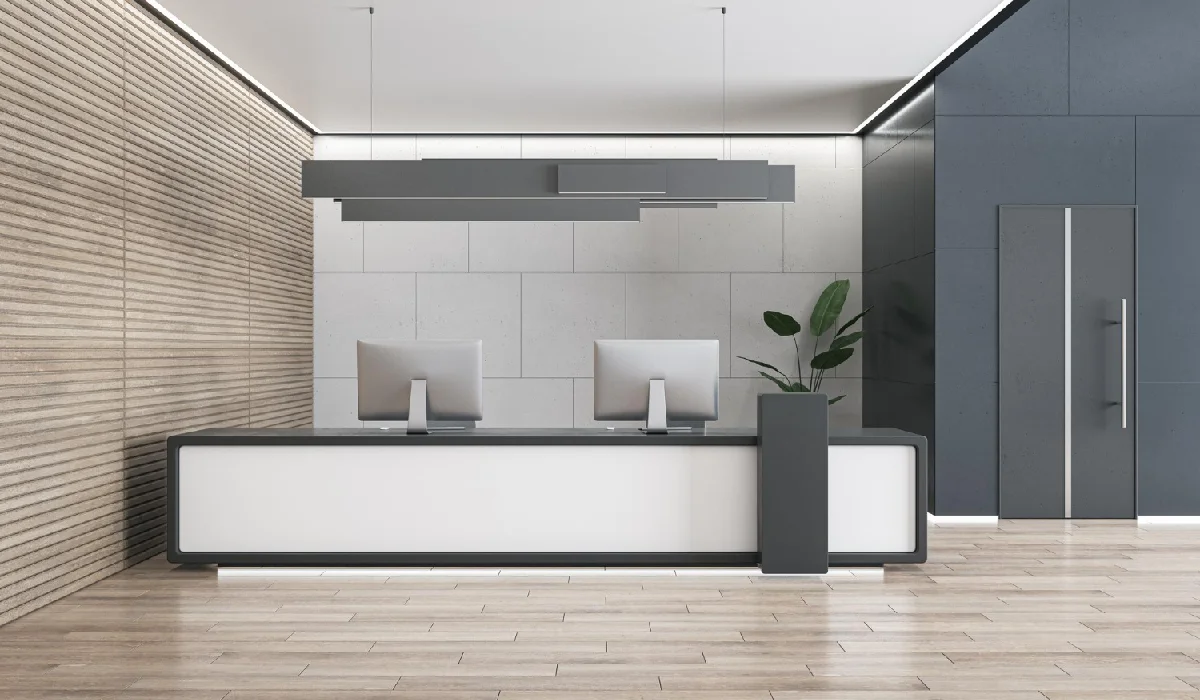
In this model, the reception counter is placed directly facing the entrance door. As soon as a visitor enters, they see the desk and know where to go. This is highly effective for visitor flow in small to medium offices where clarity and speed matter.
Why it works:
- Immediate visibility of the reception desk and no guesswork for visitors.
- The “front of house” staff have clear sight lines to greet, check in, and welcome any arrivals.
- The path from the entrance to the desk is unobstructed, reducing confusion and crowding.
Island or symmetrical desk with two entrances
Here, the reception desk sits centrally (or nearly so) in the lobby, often with two sides for staff service, and possibly two entrance pathways for visitors. This layout works well when the space is larger and when you have moderate traffic in and out.
Why it works:
- Allows staff to serve visitors from two sides, especially helpful for high-volume or dual-function areas.
- Can separate visitor flow from delivery/contractor flow if one side is designated.
- Comfortable walk-in feel and slightly more open than straight-line.
Lounge-style waiting area with minimal desk
For offices that want a relaxed, boutique or hospitality-inspired feel, the reception area can emphasise waiting area furniture and visitor comfort over formal check-in. The reception desk is smaller or subtle; the seating and furniture take center stage.
Why it works:
- Reduces the feeling of entering a rigid corporate environment, good for creative, tech or design-led offices.
- Allows visitors to feel comfortable, browse, wait, and meet.
- Flow can be naturally guided by furniture arrangement rather than stark desks.
Hybrid smart reception with technology integration
Here, the reception not only has furniture and a desk but also integrates smart reception area furniture with visitor management kiosks, touchless check-in, QR code entry, etc. The desk might still be present, but the process of entering is more streamlined.
Why it works:
- Significantly improves visitor flow: check-in is quicker and less manual.
- Reduces crowding and bottlenecks by automating steps.
- Supports better visitor management in offices.
Why Reception Area Design Affects Visitor Flow
Your reception area is the face of your brand in physical form. If guests walk in and wonder, “Where do I go?” confusion replaces confidence. Poor desk placement, unclear flow, or long queues create bottlenecks instantly. Since visitor numbers fluctuate, flexible layouts and modular furniture help the space adjust effortlessly, avoiding crowding during rush hours and awkward emptiness during slower times.
Conclusion
Designing an effective reception area isn’t just about buying a desk or rearranging chairs, it’s about creating a well-orchestrated first impression zone that guides visitors, reflects your brand, and supports efficient operations. If you’re looking to upgrade your space, focus on how your visitors arrive, how they move, what they see, and how comfortable they feel.
Are you ready to optimize your reception area? Contact our team at Shoppers Stop today to explore Office furniture in Kigali, Rwanda and we will make your reception the best part of your visitor’s experience. Let’s create a front-space that delivers both a warm welcome and a smart flow!
Frequently Asked Questions
What are the main types of reception areas used in modern offices?
Some of the main types of setups used by modern offices include: straight-line desks facing the entrance, island or symmetrical desks in large spaces, lounge-style waiting areas with minimal front desks, and hybrid smart reception setups that integrate technology.
How can furniture design impact visitor experience in reception areas?
Furniture design affects comfort, perception of the brand, ease of movement, and whether the space feels welcoming or chaotic. Good furniture helps reduce visitor anxiety, improves flow, and enhances your brand image.
How does reception area design affect visitor flow?
Design determines first-impression speed, clarity of movement, queueing behaviour, and user satisfaction. Clear desk placement, well-arranged furniture, intuitive layout and tech-enabled check-in all contribute to smooth visitor flow.
Should reception desks face the entrance for better visibility?
Yes, in most cases. Facing the entrance offers strong visibility, quick acknowledgement of arrivals, and easier staff supervision.

Hiren Kapadia is the founder of Shoppers Stop, Kigali’s trusted name in office furniture solutions. Since 2007, he has been helping businesses and individuals create productive, comfortable, and stylish workspaces through modern design and reliable service.